Open Silicon Bootcamp
Resources.
Everything you need to get a head start before Chipathon 2026 — curated courses, workshops and tools, plus a suggested learning path. No prior chip-design experience needed.
Can’t wait for Chipathon 2026?
To help you get started ahead of the event, we’ve gathered the key learning materials, documentation, and knowledge sources that will be used throughout the Chipathon track during the Baltic Dual Use Hackathon.
We will kick off the journey with Vulkos Software on Friday.
During Chipathon, participants will receive premium Vulkos coupons, giving access to advanced features. In the meantime, you can start learning today using their free courses and introductory materials.
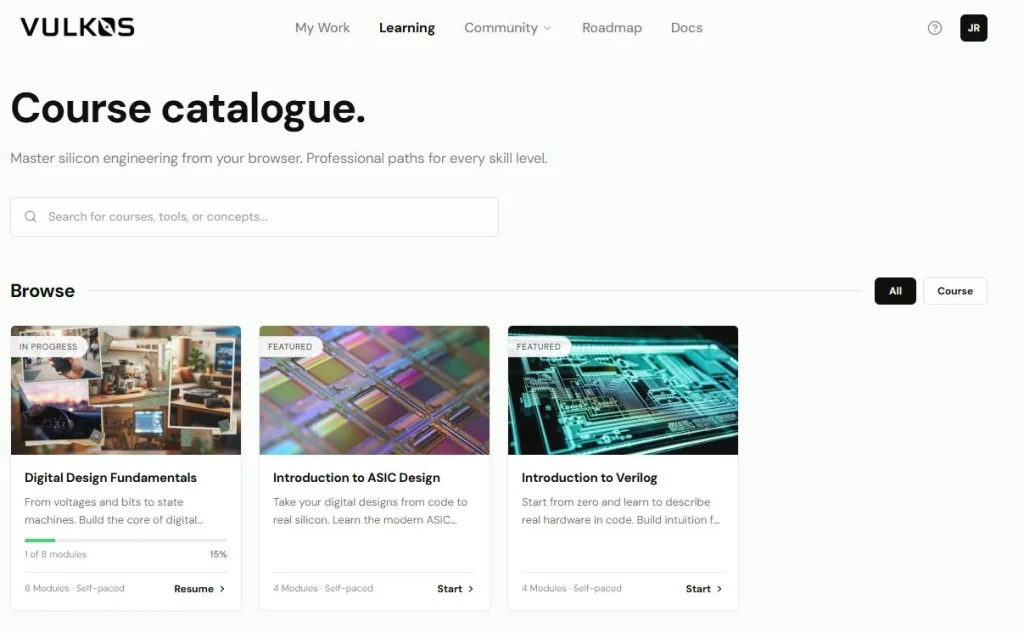
Digital Design Fundamentals with Vulkos
Start with the core digital design learning path:
-
Digital Design Fundamentalsvulkos.co.uk/learn/digital-design-fundamentals
-
Introduction to ASIC Designvulkos.co.uk/learn/intro-to-asic-design
-
Introduction to Verilogvulkos.co.uk/learn/intro-to-verilog
These courses provide an excellent foundation in digital design, ASIC development, and hardware description languages.
Build a RISC-V CPU from Scratch
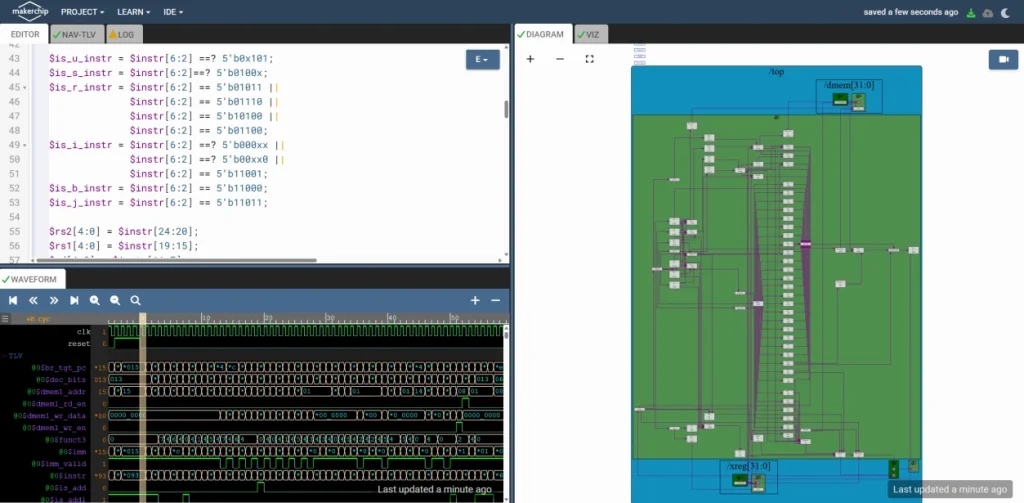
Once you’ve completed the introductory material, continue with the highly recommended RISC-V CPU design course:
-
Building a RISC-V CPU Core — zero to herogithub.com/stevehoover/LF-Building-a-RISC-V-CPU-Core-Course
This „zero-to-hero” course walks you through the complete process of designing a CPU based on the RISC-V architecture. It is normally valued at approximately €170, but is available free of charge on the course author’s GitHub site.
Tiny Tapeout Workshops
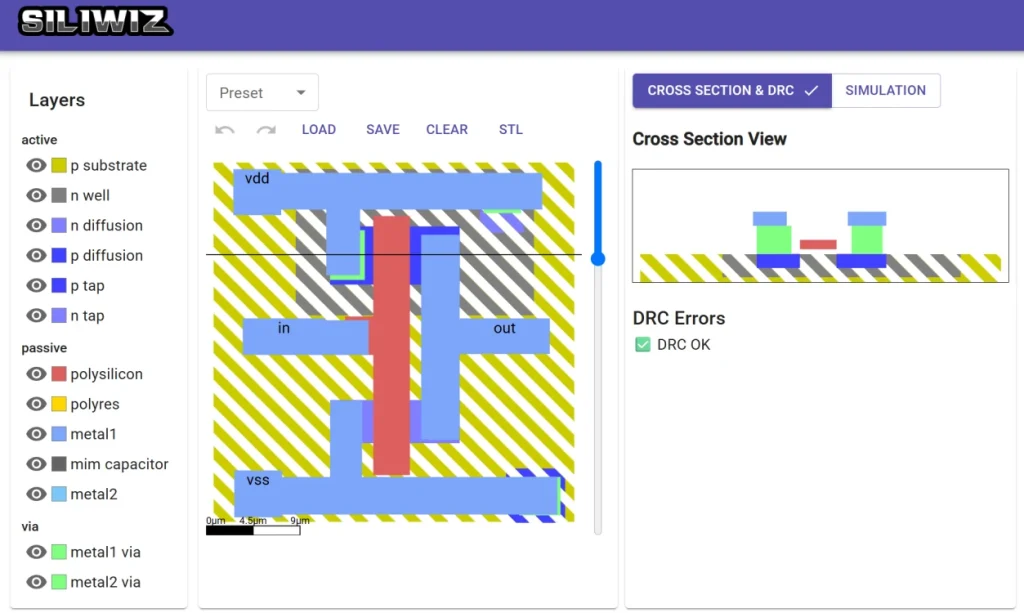
The Tiny Tapeout workshops form the foundation of the IEEE Open Silicon Bootcamp curriculum.
-
Basic Workshop — learn the gate-level design flowtinytapeout.com/guides/workshop
-
Advanced Workshop — Verilog-driven design flowstinytapeout.com/guides/advanced-workshop
The Basic Workshop teaches the complete gate-level design flow and how digital circuits are transformed into silicon. The Advanced Workshop moves beyond basic logic design and works with Verilog-driven design flows and more advanced implementation techniques.
Open-Source EDA Tool Suite Installation
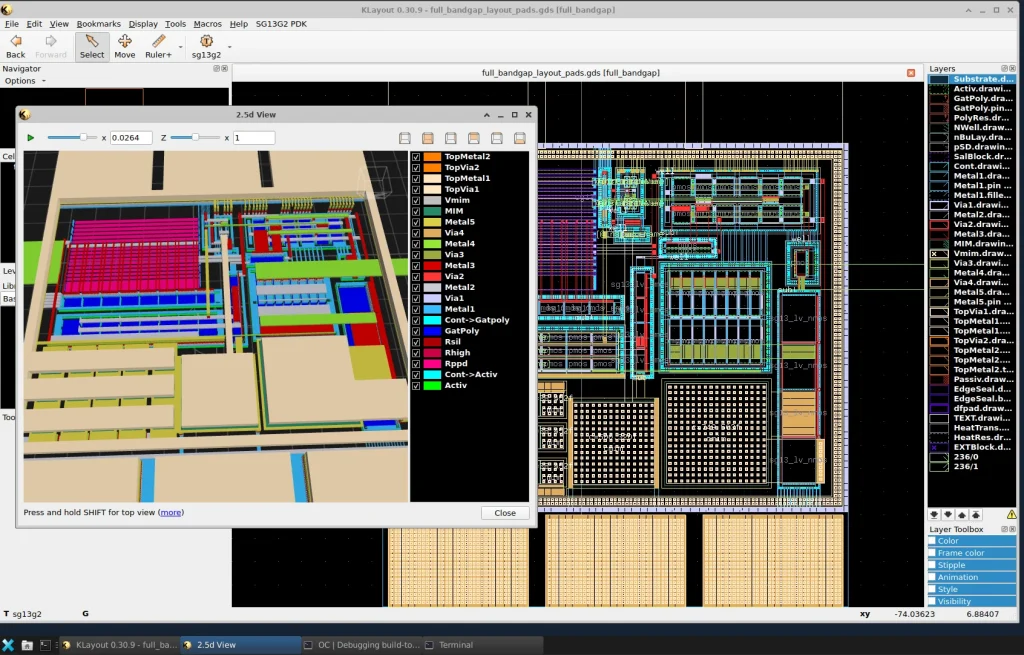
To work with professional-grade semiconductor design tools, we recommend installing the IIC Open-Source IC tools environment:
-
IIC Open-Source IC Toolsgithub.com/iic-jku/iic-osic-tools
The preferred setup is:
- Linux
- Windows Subsystem for Linux (WSL)
The toolset also works on Windows when using Docker.
Analog IC Design
For those interested in analog and mixed-signal design, the IHP Analog Academy provides an excellent starting point:
-
IHP Analog Academygithub.com/IHP-GmbH/IHP-AnalogAcademy
Requires iic-osic-tools from the previous step.
This course introduces analog design concepts and practical workflows used in semiconductor development.
Fast Circuit Simulation
For quick experiments and concept validation, we personally recommend:
-
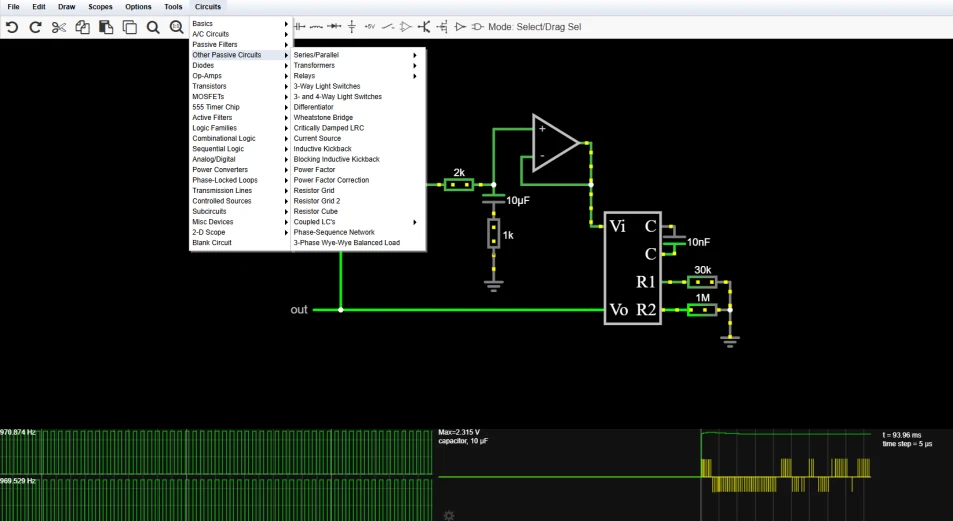
Falstad Circuit Simulatorfalstad.com/circuit/circuitjs.html
Don’t let the simple interface fool you. Falstad includes an impressive range of circuit architectures and concepts that professional chip designers encounter in everyday work.
System-Level Design and Signal Processing
To explore system modeling, simulation, and signal processing workflows, start with PathSim:
-
PathSim — Main Websitepathsim.org
-
FMCW Radar Examplepathsim.readthedocs.io/en/v0.16.7/examples/fmcw_radar.html
PathSim is a great platform for understanding system-level behavior before moving into hardware implementation. The FMCW radar example is particularly useful for those interested in sensing, communications, and dual-use technology applications.
Suggested Learning Path
- Vulkos Digital Design Fundamentals
- Intro to ASIC Design
- Intro to Verilog
- Tiny Tapeout Basic Workshop
- Tiny Tapeout Advanced Workshop
- Build a RISC-V CPU Core
- Install the Open Source EDA Tool Suite
- Explore Analog Design with IHP Analog Academy
- Experiment with the Falstad Circuit Simulator
- Learn System-Level Modeling with PathSim
By following this path, you’ll arrive at Chipathon 2026 with a solid understanding of digital design, semiconductor workflows, hardware description languages, CPU architecture, analog design, and system-level modeling.
See you on Chipathon 2026!

Open Silicon Bootcamp Resources (PDF)
All 7 sections, every link and the suggested learning path in one document — save it for offline reading.